
Nani Reveals Ronaldo’s Winning Obsession: ‘If He Didn’t Win, He’d Cry’
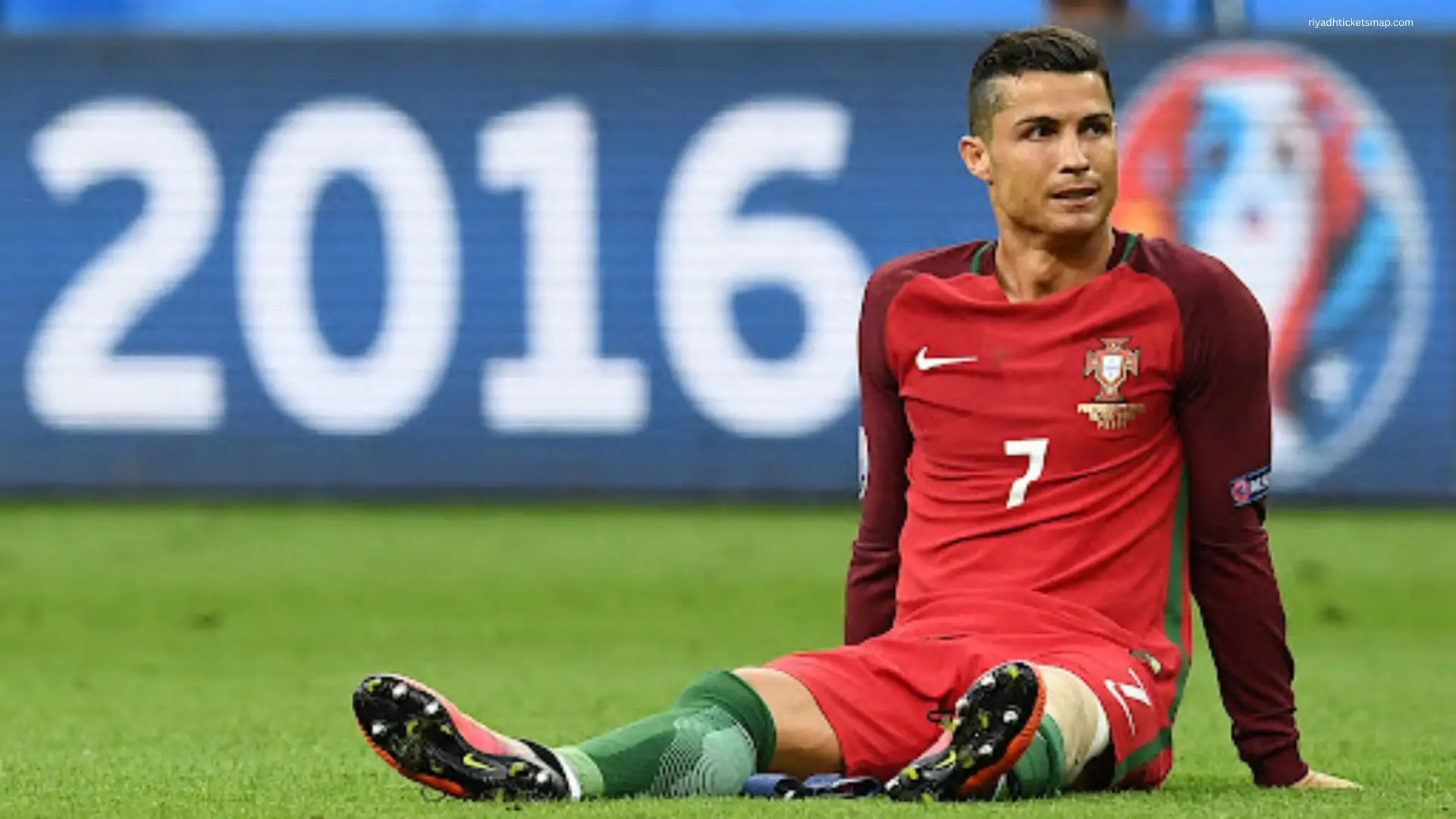
Nani on Cristiano Ronaldo
- Sporting roots: Nani says Ronaldo stood out early. He treated training like a final.
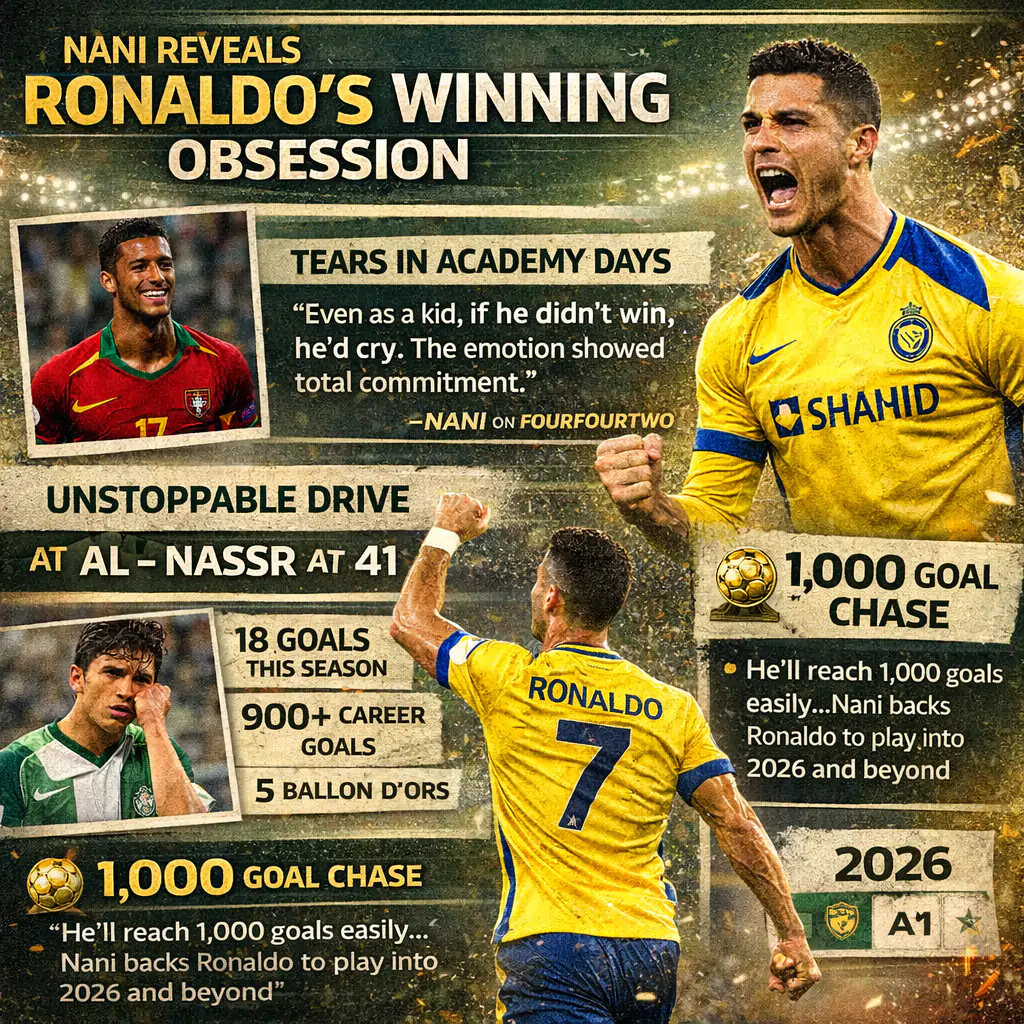
- Winning obsession: “If he didn’t win… he’d cry.” The emotion showed total commitment.
- Still driven at Al-Nassr: The same mindset fuels him in the Saudi Pro League at 41.
- Next targets: Nani backs the 1,000-goal chase. He even sees 2026 and beyond as possible.
Cristiano Ronaldo’s relentless pursuit of perfection began long before the trophies, the records, and the global adoration. Former Manchester United and Portugal teammate Nani has lifted the curtain on the mindset that transformed a talented Sporting Lisbon academy prospect into football’s most decorated player, revealing that even as a teenager, CR7 would break down in tears whenever he lost.
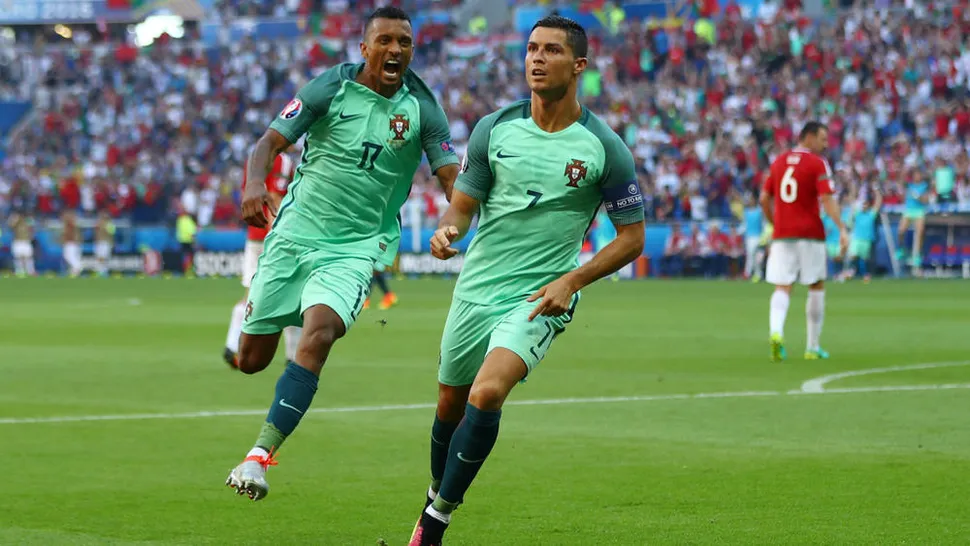
The emotional intensity that drove Ronaldo to five Ballon d’Or awards, countless championship titles, and over 900 career goals started with a young boy who simply couldn’t accept defeat—a trait that remains unchanged as he continues dominating at 41 years old with Al-Nassr in the Saudi Pro League.
Nani’s revelations provide rare insight into the psychological foundation of greatness. While many athletes possess talent, few combine it with the fanatical work ethic and emotional investment that defined Ronaldo’s journey from Madeira to Manchester, Madrid, Turin, and now Riyadh.
The Portuguese icon’s recent strike action with Al-Nassr—protesting the club’s lack of investment compared to PIF-backed rivals like Al-Hilal—demonstrates that the competitive fire burns as intensely at 41 as it did when he first stepped onto Sporting’s training pitches. That refusal to settle, that inability to accept anything less than excellence, separates legends from mere great players.
Sporting Academy Days: Where Champions Are Forged
Nani and Ronaldo’s paths crossed in Sporting Lisbon’s famous academy, one of Portugal’s most prestigious talent factories. The winger witnessed firsthand the early signs of greatness in his future international teammate, observing behaviors that hinted at the unprecedented career trajectory ahead. Even among elite youth prospects competing for professional contracts, Ronaldo stood apart—not just through skill, but through sheer determination.
“At the time we didn’t think about any of that, we simply played and enjoyed ourselves,” Nani told FourFourTwo magazine. “We had the ambition and the dream that one day we might become professional footballers, but we also knew that, until you actually get there, it’s little more than an illusion.” The academy environment breeds competition naturally—dozens of talented teenagers fighting for limited first-team opportunities creates pressure that crushes most prospects.
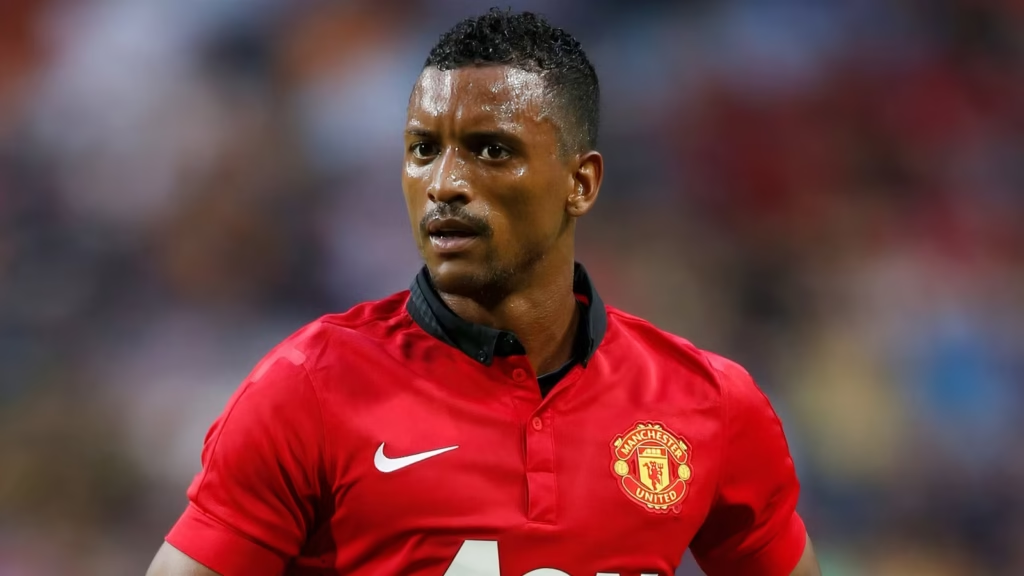
Ronaldo thrived under that pressure precisely because he treated every training session, every youth match, every drill like a Champions League final. The “spirit of sacrifice” Nani references wasn’t occasional dedication—it was daily obsession. While other teenagers prioritized social lives and typical adolescent pursuits, Ronaldo stayed late practicing free kicks, demanding extra fitness work, studying videos of Brazilian Ronaldo and Zinedine Zidane.
The Tears That Built A Legend
Nani’s most revealing observation centers on Ronaldo’s emotional responses to setbacks. “Even as a kid, he already stood out above everyone else. He knew exactly what he wanted,” Nani explained. “Cristiano lived football with enormous passion – if he didn’t win or things didn’t go well, he’d cry. That showed just how committed he was and the intensity with which he lived the game.”
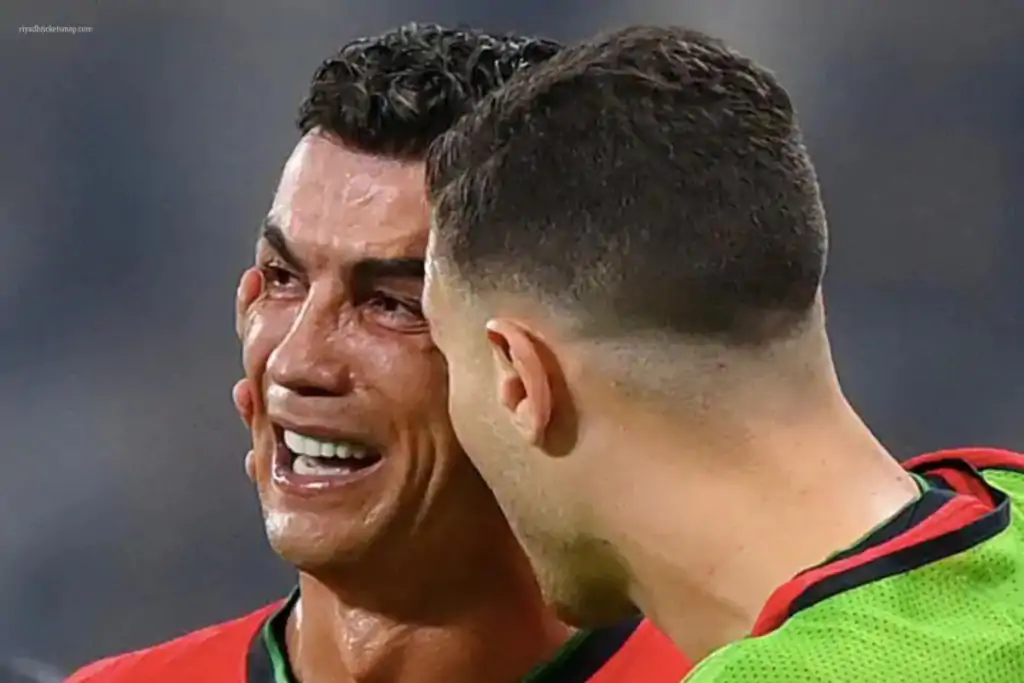
Those tears weren’t weakness—they were fuel. Each defeat, each disappointing performance, each moment when perfection eluded him carved deeper motivation into Ronaldo’s psyche. The emotional investment that made him cry as a teenager evolved into the relentless drive that saw him transform his body through obsessive fitness regimens, master both feet when naturally right-footed, and develop aerial dominance despite standing just 6’2″.
The crying stopped publicly, but the underlying intensity never diminished. Ronaldo channeled that emotional energy into becoming football’s most complete athlete. His €100 million transfer to Real Madrid in 2009 came with enormous pressure—he responded with 450 goals in 438 appearances across nine seasons.
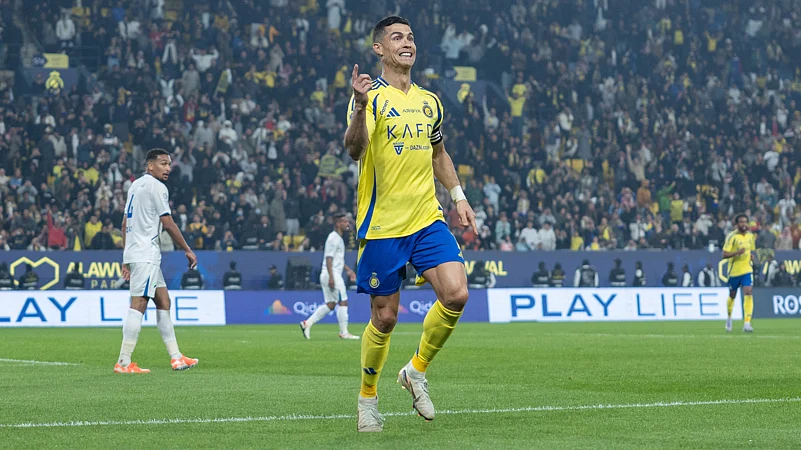
When critics questioned whether he could dominate Serie A at 33, he won two league titles with Juventus. When doubters suggested his move to Saudi Arabia represented retirement, he’s scored over 900 career goals and counting.
Lessons From Pain: How Setbacks Forged Success
Ronaldo’s career featured pivotal moments where defeat taught crucial lessons. Missing his penalty in the 2008 Champions League final shootout against Chelsea devastated him—he returned the following year to score the decisive goal as United reclaimed Europe’s crown. Portugal’s shock elimination at Euro 2004 on home soil, losing the final to Greece, burned motivation that eventually delivered Euro 2016 and Nations League 2019 triumphs.
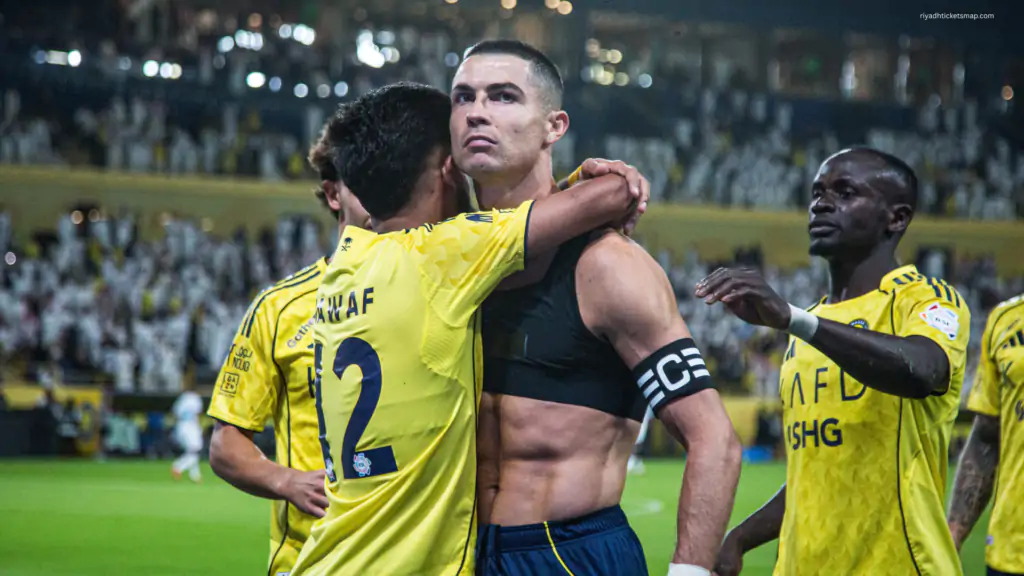
“In the end, everything happened very fast – opportunities came and we didn’t let them slip away,” Nani reflected on their shared journeys from Sporting’s academy to Manchester United’s first team. “That spirit of sacrifice we had at such a young age was key.” The phrase “spirit of sacrifice” encompasses everything Ronaldo endured—the homesickness moving from Madeira to Lisbon as a child, the mockery of his accent, the physical development required to compete with bigger, stronger opponents.
Those sacrifices compounded over decades. While peers celebrated after matches, Ronaldo analyzed his performances obsessively. While teammates enjoyed off-seasons, he maintained training regimens that rivaled mid-season intensity. While others accepted aging gracefully, he invested millions in cryotherapy, specialized diets, and recovery technologies to extend his peak years.
The 1,000-Goal Quest: Unfinished Business
At 41, most footballers enjoy retirement or occasional celebrity matches. Ronaldo trains like a 25-year-old chasing his first contract, driven by targets that motivate him as powerfully now as they did during his teenage tears. The 1,000-goal milestone represents his current obsession—a number that would cement statistical dominance over every player in football history.
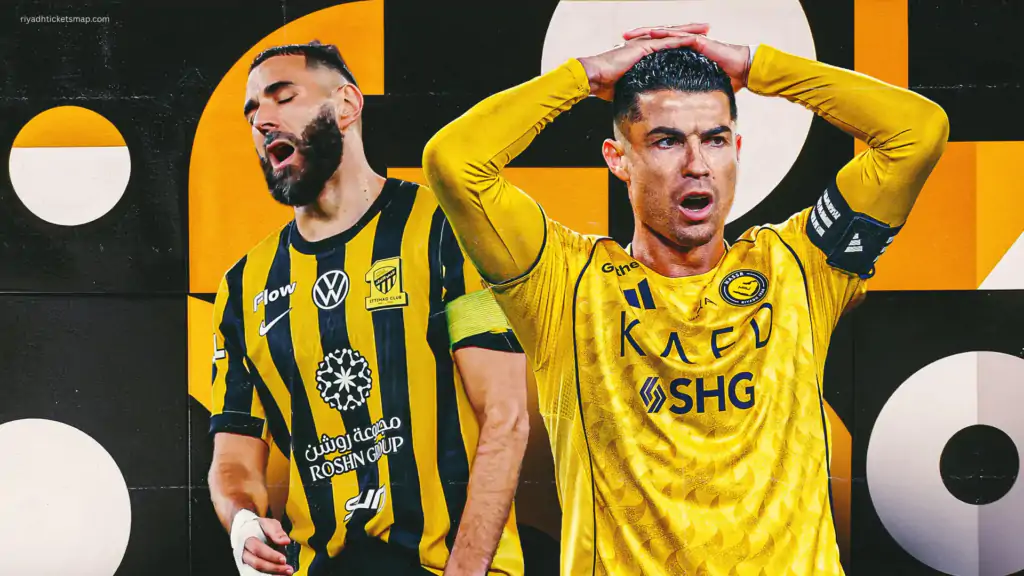
“He’ll reach 1,000 goals easily, I have no doubt,” Nani stated confidently. “It’s a milestone that matters to him – something he’s had in mind for years. He wants to reach 1,000 documented goals, because other players like Pele or Romario claimed to hit those numbers, but not all of their goals were recorded.” The distinction matters profoundly to Ronaldo’s legacy-conscious mindset—every goal must be verified, recorded, and indisputable.
Nani added: “Cristiano could make a movie with all of his. He’ll get there – even if he has to go to the lowest professional league in the world to do it. But he won’t need to.” The current tally exceeds 900 goals across club and international football—roughly 100 more needed. At his current Al-Nassr scoring rate (18 league goals in the 2025/26 season before his recent strike action), that milestone arrives within two seasons.
The mathematical certainty doesn’t diminish the achievement’s significance. Football history spans over a century—thousands of professionals competed globally. Only Ronaldo approaches 1,000 documented goals, a testament to unprecedented longevity combined with elite production.
Playing at 50? Nani Sees No Limits
Nani’s predictions about Ronaldo’s career trajectory consistently materialize. When others suggested age would diminish his effectiveness, Nani backed continued excellence—Ronaldo delivered. Now, the former winger sees no reason why his international teammate can’t defy biological expectations completely.
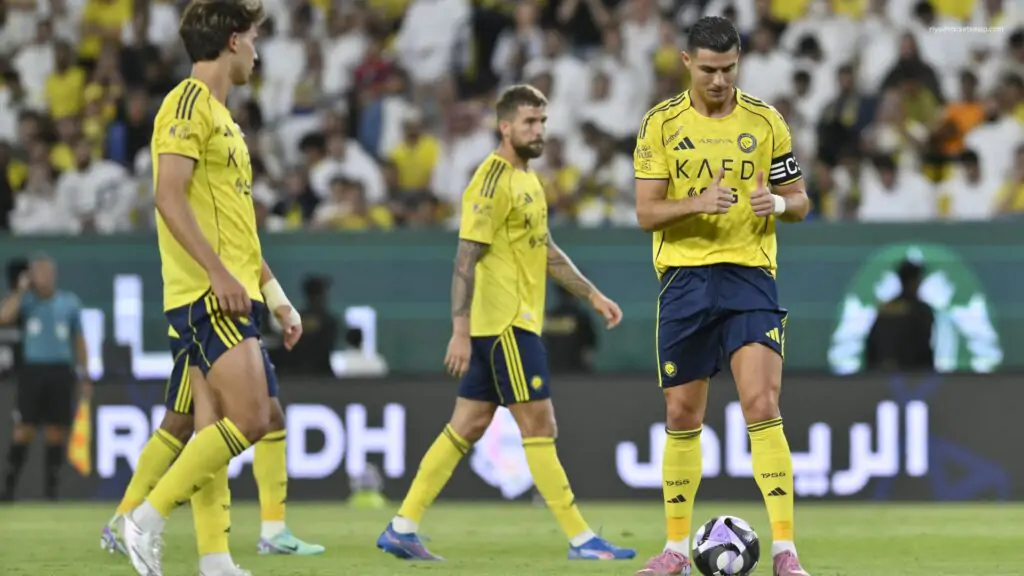
“Nothing surprises me. Cristiano has always known exactly what he wanted – when you’re that clear about your priorities and you have the right support around you, everything becomes easier,” Nani explained. “That refusal to give up is what has made him one of the greatest players of all time. Even now at age 40, he still amazes people, but not me.”
The support system Ronaldo built enables this longevity. Personal chefs ensure optimal nutrition. Private physiotherapists provide 24/7 care. State-of-the-art recovery technologies—cryotherapy chambers, hyperbaric oxygen therapy, specialized massage techniques—maintain his body despite decades of professional football’s physical toll. Sleep patterns, hydration protocols, even psychological conditioning receive obsessive attention.
“I hope he maintains the same level he showed in qualifying and becomes an important player for Roberto Martinez at the World Cup – goals don’t disappear,” Nani said regarding the 2026 World Cup in North America. The tournament occurs when Ronaldo turns 41—an age when most players have long retired, yet CR7 continues leading Portugal’s attack.
2028 Euros at 43? Why Not?
Nani’s most audacious prediction suggests Ronaldo could extend his international career to the 2028 European Championships—when he’ll be 43 years old. “I hope he does play at the Euros. That will depend on how he feels physically, whether injuries respect him, and whether he finds motivation to keep competing the way he has for more than 20 years,” Nani stated.
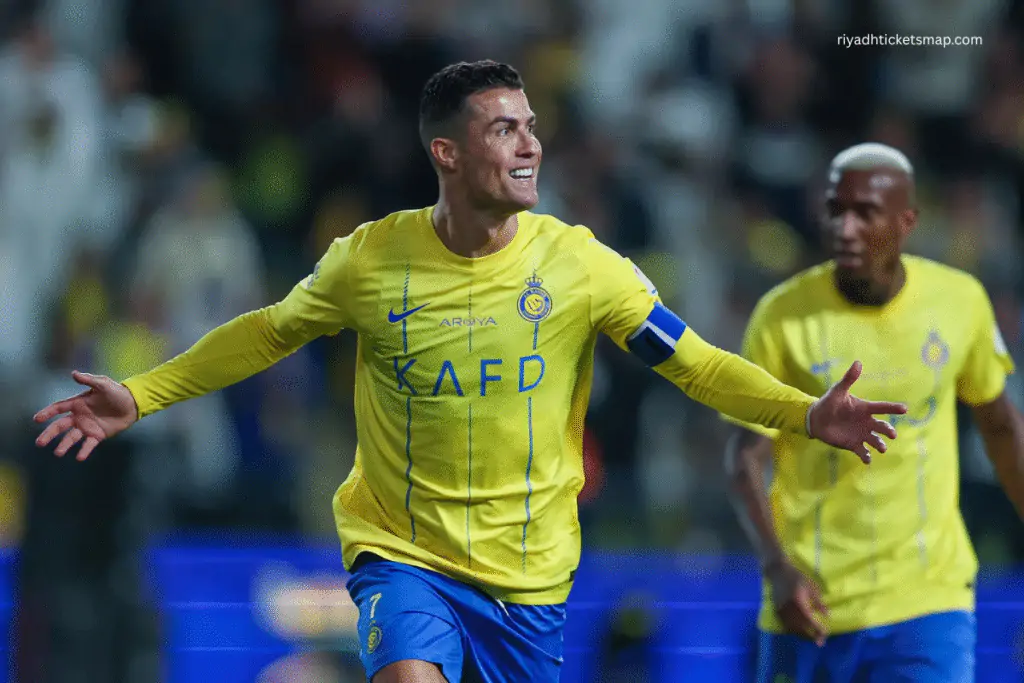
The caveat acknowledges reality: injuries become inevitable with age, recovery takes longer, form fluctuates more dramatically. Yet Ronaldo’s track record suggests betting against him proves foolish. He’s consistently achieved what experts deemed impossible—scoring 50+ goals per season into his mid-30s, winning league titles in three different countries, remaining Portugal’s first-choice striker past 40.
“But if anybody can do something as extraordinary as playing the Euros at 43, it’s Cristiano,” Nani concluded. The statement reflects intimate knowledge of his former teammate’s psychology. Ronaldo doesn’t accept limitations others impose—he creates his own reality through obsessive preparation and unbreakable will.
Al-Nassr Drama: Still Fighting at 41
Ronaldo’s recent strike action with Al-Nassr—missing matches to protest the club’s lack of investment compared to Saudi Public Investment Fund-backed rivals like Al-Hilal—demonstrates that competitive fire remains undiminished. The teenage boy who cried after losses evolved into a 41-year-old willing to risk public criticism to demand the resources required for championship success.
The dispute centered on unpaid salaries and management autonomy—issues Ronaldo refused to ignore despite potential backlash. When the PIF met his demands, he returned immediately and scored within 18 minutes against Al-Fateh, proving his point emphatically. That sequence encapsulates Ronaldo’s career: identify problems, demand solutions, deliver results.
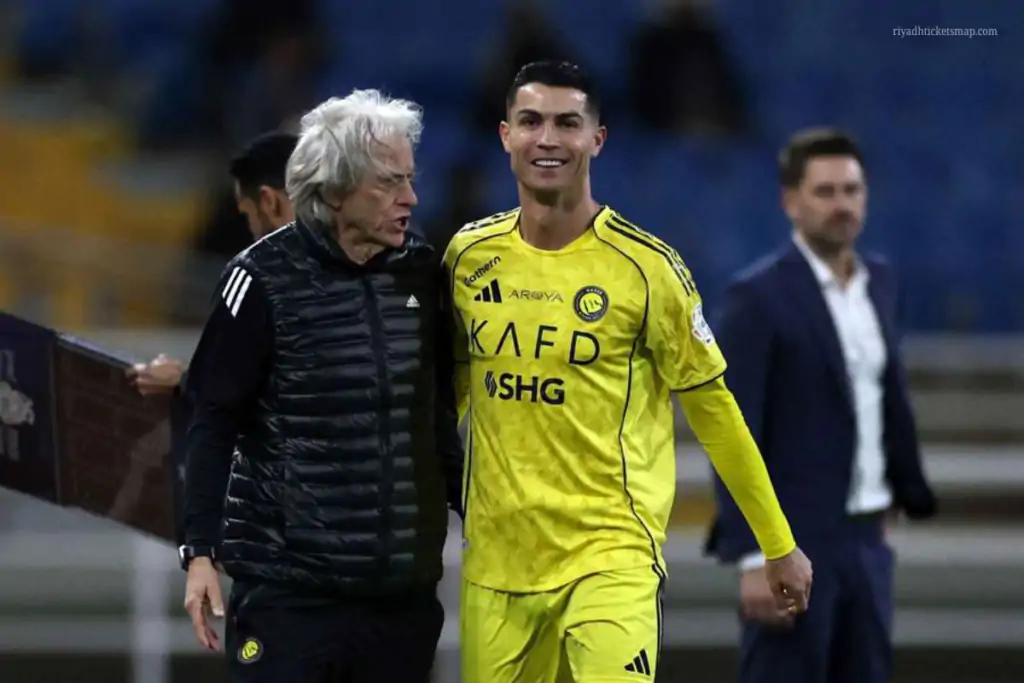
Speculation about Ronaldo potentially joining Lionel Messi in MLS adds intrigue to his future plans. A move to America would reunite football’s greatest rivalry on new soil, creating commercial opportunities while testing Ronaldo in another league. Whether he chooses MLS, returns to Europe, or remains in Saudi Arabia, the underlying motivation stays constant—winning matters above everything.
The Mindset That Changed Football
Nani’s revelations illuminate why Ronaldo achieved what seemed impossible. Talent alone doesn’t produce 900+ goals, five Ballon d’Or awards, league titles in England, Spain, and Italy, plus international glory with Portugal. Thousands of players possessed remarkable ability—few combined it with Ronaldo’s fanatical work ethic, emotional investment, and refusal to accept limitations.
The tears shed as a teenager losing academy matches contained the seeds of greatness. Each emotional outburst represented evidence of someone who cared too much to fail, who valued victory so intensely that defeat caused genuine pain. Rather than emotional weakness, those tears signaled the psychological foundation for unprecedented achievement.
At 41, Ronaldo continues chasing perfection with identical intensity. The 1,000-goal milestone beckons. The 2026 World Cup approaches. Perhaps even Euro 2028 remains possible. As long as tears threaten whenever he loses, Ronaldo will keep winning—because for him, there’s simply no acceptable alternative.